
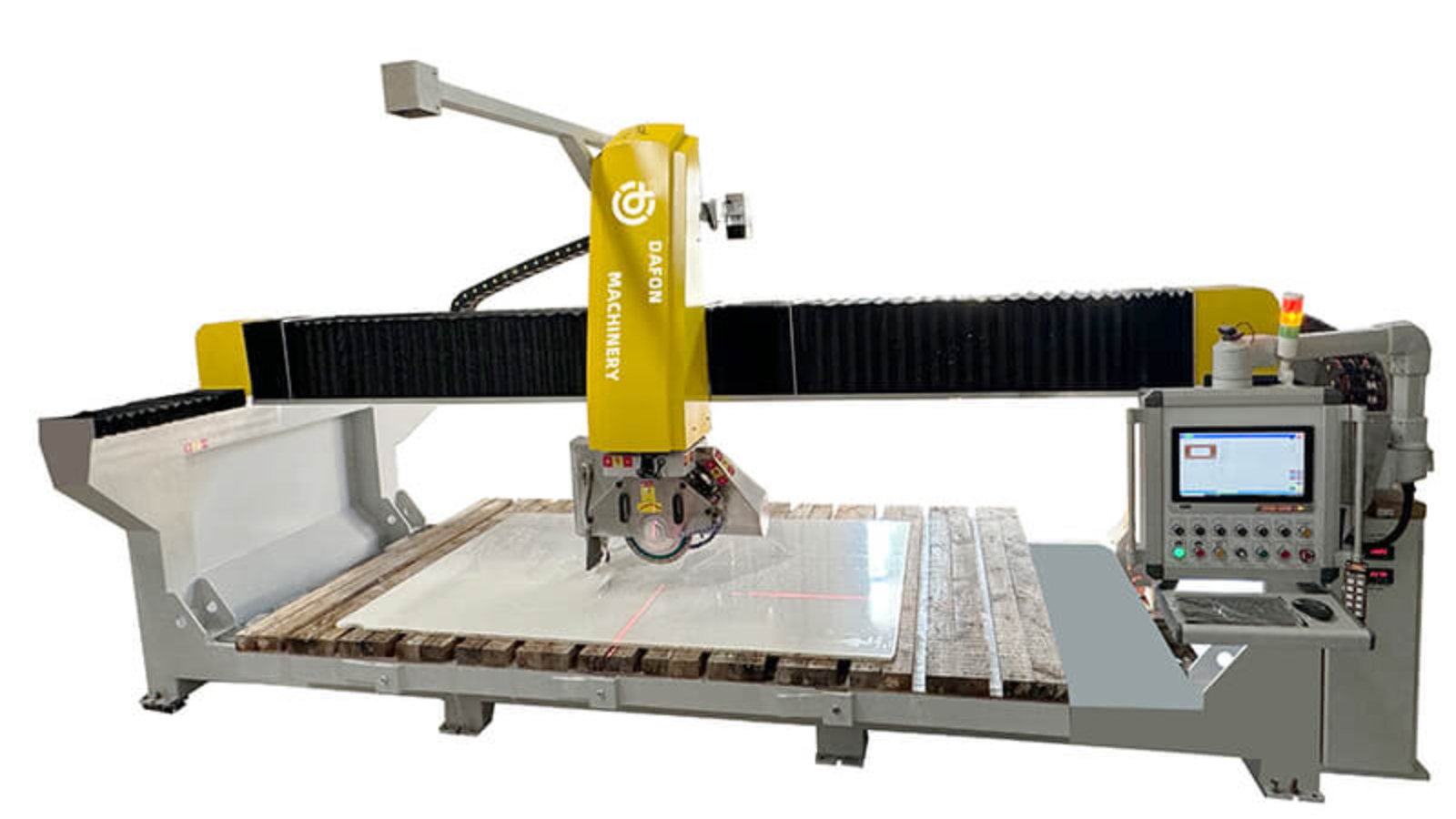
In the modern stone processing industry, precision, speed, and automation are essential for maintaining competitiveness. One of the most widely used machines in marble and granite fabrication is the stone bridge saw machine. Whether you are cutting slabs for countertops, tiles, or construction materials, a bridge saw offers a reliable and efficient solution.
What Is a Stone Bridge Saw Machine?
A stone bridge saw machine is a type of cutting equipment designed specifically for processing natural and engineered stone such as marble, granite, quartz, and ceramic. It features a bridge-like structure that spans across the worktable, allowing the cutting head to move smoothly along multiple axes.
Most modern bridge saws are equipped with CNC (Computer Numerical Control) systems, enabling automated cutting with high precision. Advanced models may include 4-axis or 5-axis capabilities, making them suitable for complex cuts like beveling, profiling, and curved shapes.
How Does a Bridge Saw Machine Work?
The machine operates by moving a diamond blade across the stone surface. The bridge structure allows the blade to travel in longitudinal and transverse directions, while the cutting head can move vertically and rotate depending on the machine configuration.
With CNC programming, operators can input cutting dimensions and designs directly into the system. The machine then executes the cutting process automatically, reducing human error and improving consistency.
What Are the Key Benefits of Using a Bridge Saw?
1. High Precision Cutting
Bridge saw machines deliver extremely accurate cuts, often within ±0.5 mm tolerance. This is crucial for applications like kitchen countertops and architectural stone.
2. Increased Productivity
Automation significantly reduces manual labor and speeds up production. A single operator can manage multiple cutting tasks efficiently.
3. Versatility
From straight cuts to complex shapes, bridge saws can handle a wide range of processing needs. Advanced models support mitre cutting, drilling, and slotting.
4. Cost Efficiency
By reducing labor costs and minimizing material waste, bridge saw machines help improve overall profitability.
What Types of Stone Can Be Processed?
Bridge saw machines are highly versatile and can process various materials, including:
- Marble
- Granite
- Quartz
- Engineered stone
- Ceramic and porcelain tiles
This flexibility makes them suitable for both small workshops and large-scale stone factories.
How to Choose the Right Bridge Saw Machine?
When selecting a bridge saw, consider the following factors:
- Axis configuration (3-axis, 4-axis, or 5-axis)
- Cutting size capacity
- Automation level
- Software compatibility
- After-sales service and support
For high-end applications, a 5-axis CNC bridge saw is recommended due to its flexibility and advanced cutting capabilities.
Is a Bridge Saw Worth the Investment?
For businesses aiming to scale production and improve quality, investing in a stone bridge saw machine is a smart decision. It not only enhances efficiency but also ensures consistent output, which is critical in competitive markets.
Conclusion
A stone bridge saw machine is an essential tool in modern stone fabrication. With its precision, automation, and versatility, it helps manufacturers achieve higher productivity while reducing operational costs. As the demand for high-quality stone products continues to grow, adopting advanced machinery like bridge saws will be key to staying ahead in the industry.
Add a Comment