
H2: Why Polishing Is Its Own Investment Decision
Polishing is the value-added step that turns a rough-cut slab into a sellable product. A mirror finish on dark granite can add 40–80 per m² in margin, and even basic resin-line polish doubles the wholesale value of marble. Yet many buyers treat the polishing machine as an afterthought, picking whatever the slab-cutting supplier happens to bundle.
That’s a costly mistake. The wrong polishing line — under-powered, wrong head count, wrong abrasive sequence — creates a ceiling on the entire operation. This guide helps you match the machine to your stone, your volume, and your finish targets.
H2: Three Main Types of Stone Polishing Machines
H3: 1. Single-Head / Portable Polishers
These are handheld or bench-mounted units used for sample pieces, edge profiling, or repairs. Most finishing shops own one or two for touch-up work. Capacity: 5–15 m² per day per operator. Price range: 400–3,500.
H3: 2. Bridge-Type Multi-Head Polishers
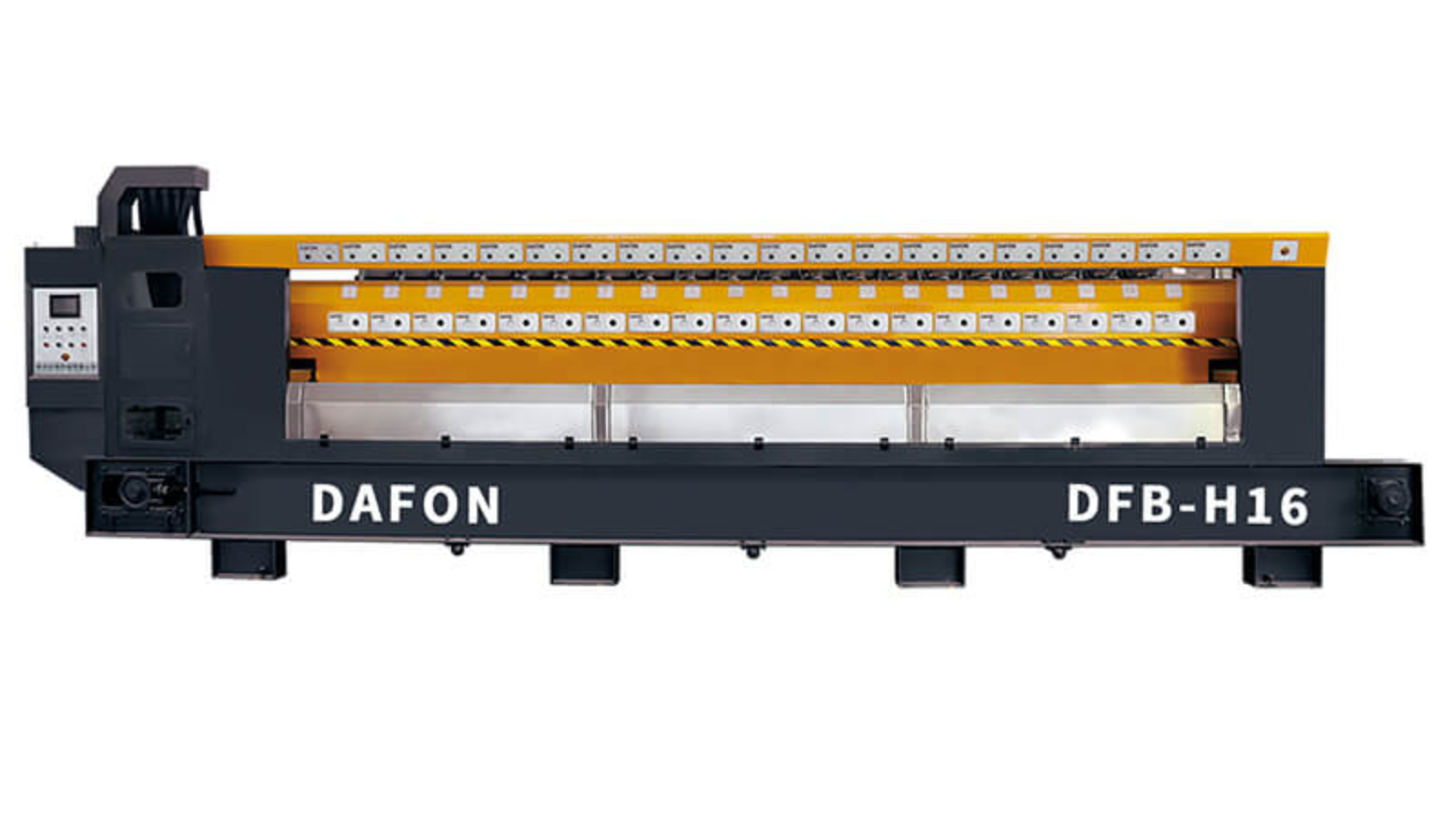
A gantry carrying 6, 8, or 12 polishing heads travels over a stationary slab on a conveyor or fixed table. Head pressure, RPM, and feed rate are independently adjustable. This is the workhorse of mid-size stone shops. Capacity: 150–400 m² per shift. Price range: 35,000–90,000.
H3: 3. Full Automatic Polishing Lines (Calibration + Resin + Polish)
A complete line integrates slab calibration, resin application, drying, and multi-stage polishing in one continuous flow. Lines typically run 12–24 polishing heads plus pre-grinding and calibration heads at the front end. Capacity: 600–1,500 m² per shift. Price range: 180,000–650,000.
Most new stone processing plants start with a bridge-type multi-head machine and upgrade to a full line within 2–4 years.
H2: Five Specifications That Drive Polishing Quality
H3: 1. Head Count and Configuration
Each head uses a different abrasive grit, typically progressing from coarse (50# metal bond) at the head to fine (3,000# resin bond) at the tail. For a high-gloss finish on dark granite, you want at least 16 heads in a full line. Marble can polish beautifully with 10–12 heads because it’s softer. Quartz (engineered stone) often needs special resin heads and 18–24 heads to achieve a glass-like surface.
H3: 2. Slab Width Capacity
Standard lines handle 1.0–1.5 m wide slabs. Jumbo slabs (1.8 m wide or wider) require a wider bridge and proportionally more heads. Make sure the machine accepts the slab sizes your customers actually order, not the average size.
H3: 3. Abrasive Flexibility
Three abrasive types matter:
- Metal-bond diamond segments for calibration and rough grinding
- Resin-bond diamond abrasive for mid-grit (200–800#)
- Felt or wool buffing heads with cerium oxide or tin oxide for the final mirror finish
A polishing line that only supports one abrasive type will be obsolete when your product mix changes.
H3: 4. Water and Slurry Management
Polishing consumes 20–40 liters of water per minute. A good line includes integrated water recycling, mud settling tanks, and filtered reuse. This cuts water costs by 60–80% and keeps your workshop compliant with local wastewater rules.
H3: 5. Automation Level and Controls
Entry lines use manual RPM and pressure knobs. Mid-range lines add PLC control with preset recipes per material. Premium lines use touchscreen HMIs that store customer-specific polishing programs and integrate with ERP systems for production tracking.
H2: Matching the Machine to Your Stone
| Stone Type | Minimum Heads | Abrasive Focus | Expected Gloss |
|---|---|---|---|
| Black/grey granite | 16 | Resin + buffing | 90–100 gloss units |
| Light granite (G603, G654) | 14 | Metal + resin | 85–95 gloss units |
| White marble | 10–12 | Resin-dominated | 80–90 gloss units |
| Engineered quartz | 18–24 | Fine resin only | 85–95 gloss units |
| Sandstone / limestone | 8–10 | Light resin | 60–75 gloss units |
If you process primarily marble, you don’t need a 20-head granite line — that’s wasted capital and abrasive cost.
H2: Where to Source Reliable Polishing Equipment
Working with a manufacturer that also produces cutting equipment simplifies the full integration. Dafon Machinery offers polishing lines designed to follow directly behind their bridge saws and multi-wire saws, with matching conveyor widths, voltage requirements, and PLC control platforms. For buyers evaluating options, requesting sample slabs before purchase is the single best way to verify that a proposed line will hit your finish target on your stone.
H2: FAQ: Stone Polishing Machine Questions
Q: How much electricity does a polishing line consume?
A: A 16-head bridge-type polishing line typically draws 80–130 kW at full load. A 24-head automatic line can reach 200 kW. Power cost is usually the second-largest operating expense after labor.
Q: What is the typical payback period?
A: For a mid-size bridge-type polisher (12–16 heads), most processors recover the investment in 18–28 months. Full automatic lines take 24–40 months but unlock volume that manual finishing can’t.
Q: Can one polishing line handle both granite and quartz?
A: Yes, with abrasive changes and recipe adjustments. Program the recipes in the HMI; changeover takes about 30–45 minutes.
Q: How often do abrasive heads need replacement?
A: Resin heads last 200–600 running hours depending on the stone hardness. Metal-bond calibration heads can run 1,000–2,000 hours before needing re-dressing or replacement.
Q: Do I need dust collection for a polishing line?
A: Yes. Quartz dust is a serious respiratory hazard, and most jurisdictions set strict silica exposure limits. Plan for a 15,000–45,000 dust collection system sized to your line.
Q: What training is included with a new line?
A: Most reputable suppliers provide 3–7 days of on-site training covering operation, abrasive changes, recipe creation, and basic maintenance. Confirm training language and the availability of remote support before placing the order.
Add a Comment