
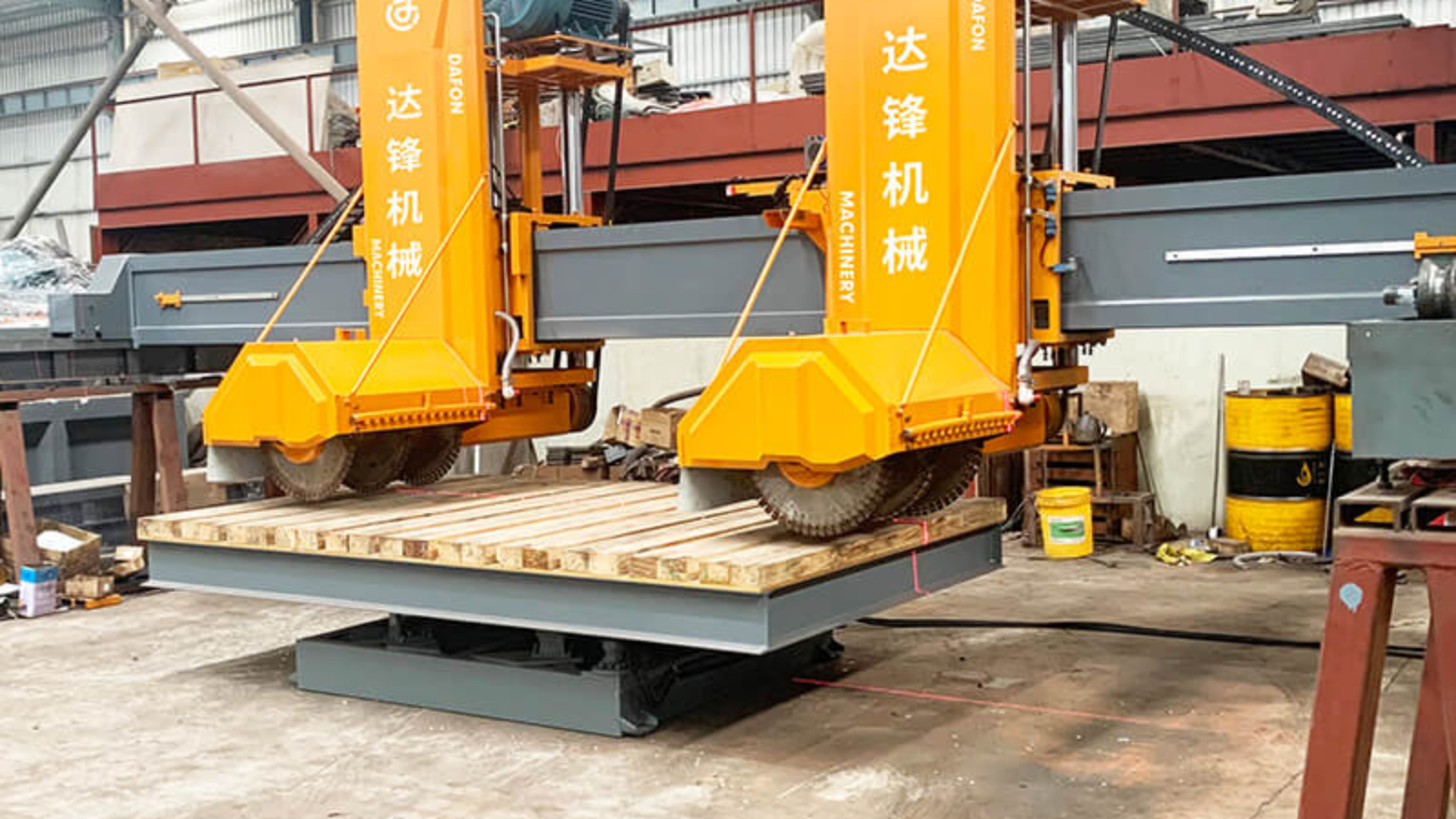
In today’s competitive stone industry, precision, efficiency, and quality are key factors for success. A stone bridge saw—also known as a bridge cutting machine—is an indispensable tool for manufacturers who process marble, granite, quartz, and other natural or artificial stones. From countertops and tiles to architectural slabs and kerbstones, this versatile machine ensures every cut is accurate, clean, and consistent.
What is a Stone Bridge Saw?
A stone bridge saw is a professional cutting machine that features a bridge structure, allowing a high-speed diamond blade to move along the X, Y, and Z axes. Unlike traditional saws, the stone slab remains stationary while the blade glides over it. Modern bridge saws often come with CNC control systems, enabling automated cutting with high precision and minimal human intervention.
Benefits of Using a Stone Bridge Saw
Investing in a bridge saw offers numerous advantages for stone manufacturers:
- High Precision Cuts – Achieve straight edges, exact angles, and consistent dimensions for both natural and engineered stones.
- Improved Production Efficiency – Automation and smooth blade movement significantly reduce cutting time and labor costs.
- Versatility in Materials – Suitable for granite, marble, limestone, sandstone, quartz, and artificial stones.
- Reduced Material Waste – Accurate cutting and advanced blade control minimize scrap and maximize yield.
- Support for Complex Designs – CNC bridge saws can perform angled cuts, notches, and custom shapes with consistent results.
Types of Stone Bridge Saws
Stone bridge saws come in multiple configurations to suit different production needs:
- Manual Bridge Saws – Ideal for small workshops and custom projects.
- Semi-Automatic Bridge Saws – Provide better precision and efficiency for medium-scale production.
- Fully Automatic CNC Bridge Saws – Perfect for large factories, high-volume cutting, and advanced design requirements.
Choosing the Right Bridge Saw
When selecting a bridge saw, consider factors such as slab size, production volume, level of automation, and budget. For small-scale operations, a manual or semi-automatic saw can handle basic cutting needs efficiently. Larger manufacturers benefit from CNC bridge saws with automatic feeding, tilting, and multiple blade options for maximum flexibility.
Maintenance and Longevity
Regular maintenance ensures stable performance and long machine life. Key practices include cleaning stone dust, checking diamond blade conditions, lubricating guide rails, inspecting the water cooling system, and verifying electrical components. Well-maintained machines consistently deliver high-quality cuts and reduce downtime.
Investing in a stone bridge saw transforms your production capabilities, increases efficiency, and ensures professional-quality results for every project. Whether you are producing countertops, tiles, or architectural slabs, a bridge saw is the cornerstone of modern stone processing.
Add a Comment